Why Should I Care About Heroes?

For the past several months, I have been discussing various figures throughout history and fiction, and saying why (or why not) those characters are heroes. I then had a really inspiring interview with my Journalism professor that prompted me to write a whole blog post on one particular topic: why heroes are important to the human psyche?

You can see it a lot in politics. One politician will tell a story in which their opponent is evil, cruel, mean, or some other variety of bad person, and paint themselves as the hero who will defeat this great enemy. It isn’t particular to any one kind of politician: both Democrats and Republicans do this all the time in the U.S., and I am positive it is apparent in every other political election in the world.

This is a very basic form of politics, just politicians throwing mud at their opponent, hoping that by painting themselves as a brighter option, people  will vote for them. Not based on what the politician actually stands for, or what they hope to accomplish, or their skill at a politician: just that they are a better option than their mud drenched villain.

The worst part? It works, and it works supremely well. The best representative of this phenomenon is the current American president, Mr. Trump, who used fear mongering, and the most vicious form of mud throwing I’ve ever seen in order to gain the presidency. You can read more about that particular election here.

So why does it work? I believe that it feeds into my earlier question- why are heroes so important to the human psyche?

In this, I don’t know the answer. This is a question for a psychology or philosophy student, not a chemistry major nerd. Maybe it is simply a facet of the human mind, where we must have heroes or people to look up to, but I sense that it is far more complicated than that simple answer. If someone does read this and has an answer, please shoot me a message at poevoro@gmail.com.

Ah, this is the last post. It’s been fun writing these, and I hope someone out there enjoyed reading them. Toodles!

Police Officers: Not American Heroes

20181212_135956
My Local University Police

There is not a person reading this that has not heard of soldiers, firefighters, or doctors  being referred to as heroes. You go out of your way to help these persons, or have been helped by these people. You can see stores with signs saying ‘veteran’s discount,’ and people saying ‘thank you for your service,’ in regards to soldiers. Firefighters, especially in California, are seen as battling the demon of flame as they protect people’s houses and belongings, as well as the people in the path of the fires. As you might have read in my interview with Professor Richter, and in many other stories, doctors are seen as the last line of defense against Death itself.

One group that some have noticed that is absent are the men in blue- policemen. You see them more as far as media is concerned- there is the old show COPS, but there is also shows like NCIS and its spin offs, CSI, Law and Order, and more recently with Brooklyn Nine Nine.

The reason I neglected them is directly related to the fact that I am a liberal American. With the era of police brutality that we currently live in, I cant see police as a hero. Black persons are trained from almost birth that the police is the enemy, and one must treat the police in a certain way. While this has been widely publicized, there are a number of stories where latino persons are also treated inhumanely. You can check out more info on that topic here. To make matters worse, I could mention the history of violence against LGBTQ+ persons, and how they are unlawfully imprisoned or attacked by the police, or how when they have been attacked, police have not stepped forward to protect them. (You can read more about it here.)

With that kind of violence and apathy, it is hard to consider these men and women as heroes. They don’t seem to protect everyone- just people they like.

A Master of Their Field: My Interview with Professor Richter

20181214_131609
Professor Richter

I recently had an interview with one of my professors, Bernard Richter. A PhD in comparative literature, I figured he would be a good expert on the topic of heroes. I asked him a handful of questions, like who his heroes were, and some more esoteric questions on heroes in general.

My first question was very simple- who was his hero? His response was rather personal, far more personal than I expected. A few years ago, his twenty two month old daughter had developed a tumor that was in her liver. He was holding her at one point and felt it, and had a sinking feeling. After some tests were run, the horrifying was proven: she had cancer.

Throughout the process, and even into the surgery itself, Doctors Dutta and Rangaswami, along with a small army of other doctors, nurses, anesthesiologists, and other positions that I don’t know, helped Richter and his partner get through the trying times of getting a child through cancer. It all worked out- she is happy and healthy now, and would not have been without those doctors. If you want more information on these doctors, or the program they are part of at Stanford, you can check out a link to their site here.

Moving on from that, we also discussed something a little closer to the blog itself- the difference between hero and protagonist, and how that is an important distinction. For example- many people would argue with the idea that a character like Deadpool would be a plain hero, but he is definitely the protagonist of his story.

Lastly, one topic that stuck in my mind is that as someone gets more educated, more intellectual, the fewer heroes a person has, and vice versa, the more spiritual a person gets, the more likely that they have a larger number of heroes.

For example- I had a English teacher who was a on the spiritual side, and saw Martin Luther King Jr. as a hero to them. On the one hand, he was very, very important to the civil rights movement, and was instrumental for black persons to get the right to vote. On the other hand, he slept around, abused his wife, and wasn’t a particularly great father.

This is not to say that Martin Luther King Jr. is not a hero- far from it. But other non-racist persons don’t necessarily see him as a hero due to these character flaws.

Fifteen Seconds of Fame: Little Heroes

You see them on Facebook, Twitter, Instagram- the person that stood up to someone, held the door open, gave someone else a free cup of coffee, or something to that effect. Do they have a lasting impact? No, probably not. You probably won’t remember the name on the article or meme you saw. The person who did the heroing? Also no. The person that had the nice thing done for them? Ah, now we are getting somewhere. Now those people have something to look at, as far as being a hero is concerned.

It’s not even hard to become someone’s hero this way. A homeless person is hanging outside the grocery store, and you hand them a couple of dollars to get some food. You open a door for an old lady, that kind of thing. (You can read a ton of these stories here on Facebook.) You don’t think about it as the hero, it is simply you being nice, spending the three seconds to think of going slightly out of your path to be nice to that person, whither or not you think there is a reward for it. On the other hand, the person that was was on the receiving end will often be exceptionally happy that the thing happened, even posting about it on social media.

Many, many people consider their parents as heroes, myself included, for the trying times that those folks went through while raising them. My own parents went through a period where each lived on either side of the country, my dad raising me and my sister in California, while my mom was going to school in Virginia.

Other parents have similar stories: single moms figuring out how to feed their kids, dads working their asses off in order to pay the bills, or non-binary persons trying to raise their their children in addition to the difficulties involved with their lives. Parents define an important part of everyone’s lives, and should be seen as heroes.

I Don’t Like Superman.

No holds barred here. I don’t like the character, I don’t like the concept. He, for a lack of better word, is overpowered for the sake of being over powered. To make matters worse, he is Space Jesus.

Superman, as a character, can literally do no wrong. He will always save the person in distress. He will always beat the bad guy. He will always prevent the apocalypse. Without fail. Reading/watching a piece of Superman media will always be the same. And to me, who moonlights as a writer, that just makes a horrible character.

There is no depth to his character, no character growth. The closest that I have seen is when writers have looked into Superman’s origins in Kansas, but it simply reinforces the idea that he is a simple country boy that will always make the right decisions. And that is almost a sin- there is never any struggle, there is the eternal knowledge

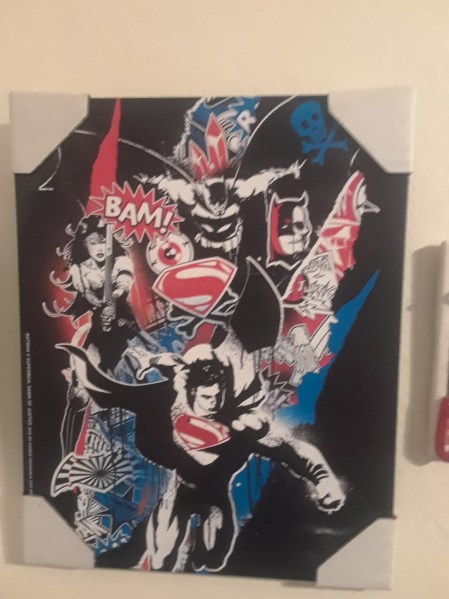
20181215_105446
Some Art My Roommate Had

that he will prove victorious in whatever is going on.

Adding to the fact that Superman/Clark Kent is a perfect human being (to an adult, white male perspective, as I am there are reams of articles on other blogs discussing how Superman is a sexist) he has every superpower in comics. Super strength? Can fight gods hand to hand. Speed? Goes on regular foot chases with the Flash. Can fly? Of course. Laser beams? Had them when the thought was conceived. Ice powers? Frost breath that matches Mr. Freeze. Literally being invulnerable to most forms of violence? Got that in spades. They don’t call he the ‘Man of Steel’ for nothing.

This all adds up to the fact that Superman has every tool imaginable to overcome any obstacle. Due to this, the writers have two choices- make him weaker, or make him think. This ends up to 2 major weaknesses. Kryptonite, which has become a word all onto its own due to its affect on Superman, and magic. Even still, with those two weaknesses, as soon as whatever is weakening him is turned off/broken, he just punches the guy, and the battle is won.

One last point. One that really seals the deal for me as a character, and a hero: Superman is a stupid person.

There. I said it. Despite the super speed, strength, and being a perfect person, he is a moron. As it is literally the only way to beat a god, writers fell on the idea that Superman cant think himself out of a box. This has weakened him to the point that Superman has to be saved by the Justice League on more than one occasion.

All told, I think Superman is a terrible character. As a person, and as a protagonist, he is a horrible piece of fiction.

Gilgamesh: The Very First

The Epic of Gilgamesh is one of the first of a variety of things. It is the oldest written story ever told. As such, Gilgamesh is the very first literary hero. To clarify, the Epic is the oldest story that we know of. It is extremely possible that there was a variety of legends and stories before Gilgamesh, we simply haven’t come across it, or are able to read it. If you have the time, you can read a longer summary of the Epic here.

To begin with, the story takes place in Uruk, which is also considered to be the first true city in the world, believed to have been founded in 4500 BCE, and was once the most important city in ancient Mesopotamia. In fact, there are so many firsts that took place here that you should totally check out an awesome page on Uruk here.

The story follows a god-king named Gilgamesh, who was a tyrannical king to his subjects, committing murder and rape whenever he felt like it. The gods got mad at this and sent an wild man named Enkidu to kill Gilgamesh. They met, and fought, and like many bar brawl stories that we have heard, they became best bros. Again, the gods got mad and killed Enkidu. Now grieving for his friend, and facing his own mortality for the first time, Gilgamesh went in search of immortality, and found it. This process takes a couple years, but it ends up making him a much better person.

At the end, one of the main themes of the story is a form of self redemption, as we see a god-king go from being a rapist murderer to maybe being a much better person. A much larger thought behind it is that Gilgamesh is a template for heroes throughout fictional history. Writers follow this template for millenia, from movies to books to TV shows. As such, it might be useful to look into the very first hero when you write a hero.

You: Everyone is a Hero

One of the founding ideas that I have in my head about people is a line I read in a Facebook post a couple of years ago. “Nobody realizes that they are side characters in someone else’s story. ” I went a step further, and coined ‘Everyone is the hero of their own story.’

With that thought in mind, it is a billion times easier to go forth into the world and do what I need to do. Horrible things might happen to me, or to the people around me, but it will turn out okay- because we are the heroes of our own stories.

I think that this is an important nugget of wisdom for literally everyone- no matter what happens, despite all of the darkness around you or those you know, everyone will turn out okay.

There is a dark side to this. A major group that has gone down in history as an example of true evil were the Nazis during World War 2. According to the world at large at the time, and some people even decades after, each and every single person who followed the Nazis were evil. And I’ll be the first to admit that many of them were. However, many people simply were following orders. Some people didn’t feel responsible for their actions- ‘I’m not responsible for killing those people. My commander is, because they told me to.’ You can read about Nazi’s saying this during the Nuremberg Trials here.

Is that a gut wrenching thought? Absolutely. Is it an important thought? Absolutely. Many of the greatest villains in fiction and history have followed a similar pattern- they thought what they were doing was right. Wilson Fisk of Marvel Comics became a crime boss because he thought he could limit crime. He knew that crime was still going to happen, but if he controlled all of it, he could limit the casualties. Napoleon Bonaparte went on his crusade because he thought that the French would benefit from it.

In the end, it doesn’t matter who you are- good or bad, rich or poor, man or woman or neither, everyone thinks that what they are doing is the right thing to do.

Hey, I know That Guy: A Discussion on Historical Heroes

Every culture has them, its part of the identity of the culture: real heroes. People who went beyond what is normal, or even human, and has ascended almost to godhood. While that is important, it is also important to realize that these are real people, and therefore are imperfect. As an American, there are two that immediately step forward as historical heroes- Aberham Lincoln, and George Washington.

Aberham Lincoln is famous for a variety of reasons. One, he was President of the United States during the Civil War. Two, while he was President, he made some very astounding decisions that shaped the country, and changed the world. Three, he epitomizes the ‘rags to riches’ story that is a founding American ideal. You can read a biography of him
here.

This is all information that most Americans are taught, right next to counting and learning their ABCs, at least in the North. In the South, there is a decidedly different picture. Here, Lincoln is seen as the face of ‘Northern Aggression,’ one of the terms that the South uses for the Civil War. They use such charged terms for a very specific purpose: the way of life that defined them to the rest of the world was lost, and the South is still grieving for their loss. In fact, that conflict that ended in 1865 still plays a massive role in politics.

George Washington is a little different. He was the very first President of the United States, and defined the role in a way that nobody has ever done since. He managed to lead a rag-tag group of farmers and city slickers against the largest, best trained, and best equipped military in the world at the time. You can read a more detailed biography here.

What people will likely skip is the George Washington was horrible to his men, lost more battles than he won, and was almost killed a number of times during the Revolutionary War, and only survived due to British incompetence. He was also a white southern slave owner, and refused to have black soldiers within the Continental Army.

While I have focused on American heroes, every culture has them. What is important here is that while heroes are important to a culture as a whole, to help define it, the people are not nearly as well sugarcoated as some historical enthusiasts might believe.

‘I Wanna Talk About Me!’ Antiheroes, and Why They are Weird

A common comic book foil, Anti heroes are an interesting take on the idea of hero. Heroes are, well heroic. Good to the downtrodden, genuinely nice people for the most part, willing to sacrifice themselves for the greater good, etc.

Obviously, that description is painfully specific, but works for the definition of heroes. Antiheroes, on the other hand, are decidedly not. These guys, folks like Wolverine out of the X-men, Deadpool, or Namor out of Marvel, are generally not very nice people. They do what they do because they feel like it, not necessarily because its just the right thing to do. They are mercenaries, selling their power for money or favors.

That by itself makes them really interesting characters. While heroes can be written to do no wrong, and are always correct, the writers of antiheroes are free to make their characters wrong, or lose. In this, many see antiheroes as more relatable. Superman, while he is fairly close to a comic book version of Jesus, isn’t very relatable: nobody is actually perfect.

Wolverine, on the other hand, is decidedly not perfect. He drinks, he smokes, he sleeps around, and is frighteningly good at killing people. While the vast majority of people in the world don’t kill people, many do drink, smoke, or sleep around. Wolverine actually has the potential to be a person you know. Maybe you don’t hang out with them very often, but most people know a cranky old war veteran.

One of the common characteristics of antiheroes, however, is their unflagging loyalty to those they choose. When everything goes sideways, and battle lines are drawn, you know for a fact that Wolverine is going to work with the X men, not the Brotherhood of Mutants.

The other common characteristic is one that really defines antiheroes- they are willing to do the nasty thing that other, more conventional heroes, aren’t. Generally, this is showcased as having a body count in general, but can be shown as willing to sacrifice innocents to complete an objective. As far as literature goes, this often gives a source of inner conflict to the hero- do they do the nasty thing his not so great friend suggested and get the cool thing? Or don’t, and not get the important thing, but keep your pride/code intact? Such a question is a common one to ask the character, but is a valuable source of character development. And can only really be pulled off when the protagonist has an antihero buddy.

My Hero, a Primer on Things to Come

For now, I am going to set a baseline- what do I mean when I say hero? Is it a famous person? Someone with super strength? Both? Or something else?

With that in mind, I introduce you all to Rokii, my Dungeons and Dragons character that I have never played as far as D&D goes, but has been my starting point in almost every RPG I have ever played. A half elf werewolf, he is an exceptional user of magic, a fantastic swordsman, with black hair tied into a pony tail and has Nightshade, a talking sword.

But why has he stuck with me since I was ten? Why do I think he is cool? Because he is what I envision as the best form of me in a fantasy setting. He is strong and fast and smart and charismatic, and I look up to him when I a feeling less than heroic. Rokii can show me what being a good person is, and how to act as a good person. He is also a person that I can put scenarios and circumstances against, and I know he will always win, or choose the right decision.

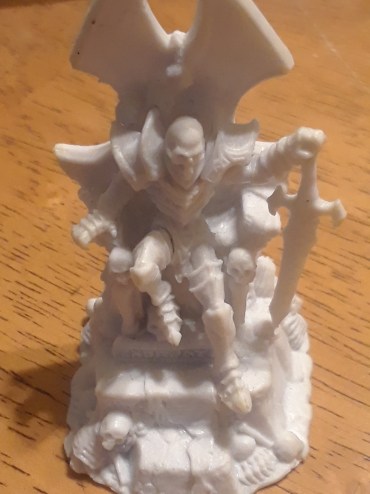
20181212_160839
A Dungeons and Dragons Boss

For the most part, Rokii is me, but with rose tinted glasses. He exhibits the best parts of me, and leaves the worst parts behind. He is an amalgamation of all of the things that I think/have thought was cool, and is a reflection of what I hope I can be.

That is my definition of hero. You can look up a more scholarly definition here, but I am likely to disagree with it. I think it is someone people look up to, for whatever reason. Someone’s parents are their heroes. A teacher. A priest. Or a fictional character. But someone that someone else thinks of as a role model. Does that mean that all role models are heroes? For this definition, yes. All role models are heroes to someone. Even some more controversial people can be heroes to some, and not to others. What I plan on looking at going forward is the heroes themselves, and what those heroes mean to those who call that person a hero.